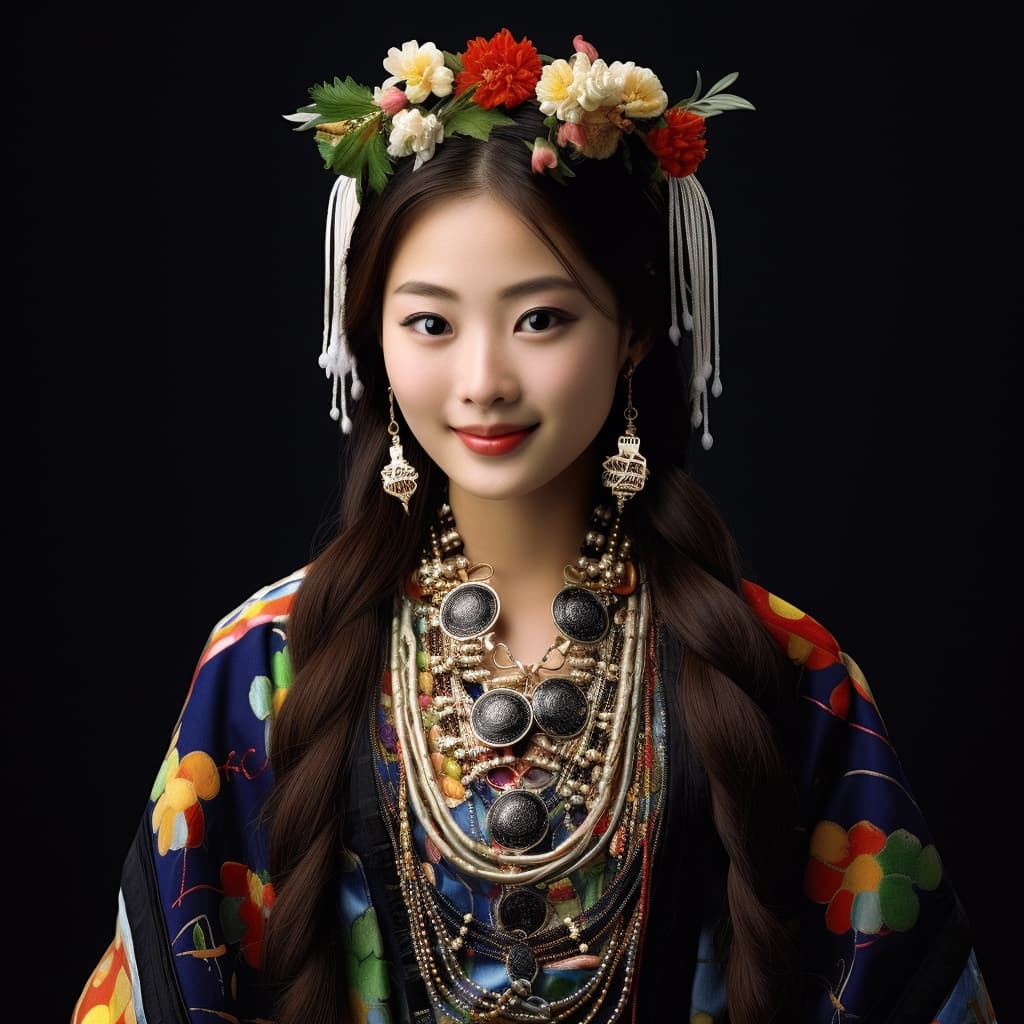
Ryukyuans Erotic
Ryukyu Islands (Japan)
Japonic / Ryukyuan
Ryukyuan religion
Amami (including Kikai, Amami Ōshima, Tokunoshima, Okinoerabu, and Yoron), Okinawan (including Kunigami) Miyako, Yaeyama, Yonaguni
East Asia
About Ryukyuans People
The Ryukyuans are the indigenous people of the long arc of islands that runs southwest from Kyushu toward Taiwan — a chain that for roughly four and a half centuries was its own kingdom, paying tribute to Ming and Qing China while quietly being squeezed by the Satsuma domain of southern Japan. That double orientation is the key to understanding them. They are not simply Japanese with a regional accent; they are a distinct people whose kingdom was annexed in 1879, whose land became the only ground battle fought on Japanese soil in 1945, and who lived under direct American military administration until 1972. Each of those dates left a mark that has not faded.
The Ryukyuan languages — Amami, Okinawan, Kunigami, Miyako, Yaeyama, and Yonaguni — are sister languages to Japanese, not dialects of it. They split from a common ancestor more than a thousand years ago and are mutually unintelligible with modern Japanese and largely with one another; a speaker from Yonaguni and one from Amami cannot hold a conversation in their heritage tongues. UNESCO classifies all six as endangered. Postwar schooling in standard Japanese, combined with the older prewar practice of punishing children for speaking the local language, has left fluent speakers concentrated among the elderly, though revival movements in Okinawa and the outer islands have gained traction in the last two decades.
Religious life centers on a system older than the kingdom itself, organized around female ritual specialists. The noro serve community shrines and the sacred groves called utaki; the yuta work as spirit mediums consulted for illness, ancestors, and family trouble. Ancestor veneration sits at the core, with the family tomb — often a large turtleback structure — functioning as a gathering place rather than just a grave. Buddhist and Shinto elements were layered on during and after the kingdom era, but the indigenous framework persisted underneath and remains active.
The internal divisions matter. Amami was severed from the kingdom by Satsuma in 1609 and has been administered with Kagoshima ever since, which makes its cultural pull northward stronger than Okinawa's. Miyako and Yaeyama, far to the south, carry their own histories of heavy taxation under the kingdom and a sharper sense of being peripheral to Naha. Okinawans themselves are split between the main island and the small northern Kunigami-speaking communities. Treating "Ryukyuan" as a single identity is a convenience; the people inside it do not always agree it fits.
Typical Ryukyuans Phenotypes
Reference for AI generation — hair, eyes, skin, facial structure, build
Ryukyuans diverge subtly but consistently from mainland Yamato Japanese phenotype, reflecting the islands' distinct population history — a deeper Jōmon-derived substrate with less of the later Yayoi continental admixture that shaped Honshū. The result is a face that is often read as more pronounced, more sculpted, more visibly archaic than the typical mainland average.
Hair runs near-universally black to blue-black, occasionally very dark brown, and tends toward a coarser, thicker texture than Yamato Japanese — usually straight but with a noticeable rate of natural wave, especially through Okinawa and the Sakishima islands (Miyako, Yaeyama, Yonaguni). Eyes are dark brown, sometimes warm enough to read amber in bright light. The epicanthic fold is present but frequently lighter or partial — many Ryukyuans have a defined double eyelid where mainland populations show a single lid, and the eye shape itself is often larger and rounder. Brows are typically thick and well-defined.
Skin tone spans Fitzpatrick III to IV, generally a shade darker and warmer than mainland Japanese averages, with golden to olive undertones; the Sakishima islands trend warmer still under heavier UV exposure. Facial structure is the clearest tell: nose bridges are higher and more defined, alar width moderate, the nose itself often more prominent than on Honshū. Lips tend toward medium fullness rather than thin. Jawlines are squarer, cheekbones high but less laterally flared, giving a more three-dimensional profile. Beard and body hair growth is typically heavier than mainland Yamato norms.
Stature is shorter than the Japanese national average — historically among the shortest in East Asia — with compact, sturdy builds rather than slender frames; the karate lineage that came out of these islands reflects a population built low and strong. Sub-group variation is real but gradient: Amami sits closest to Kyushu Yamato phenotype, Okinawan is the central type, and Sakishima populations (Miyako, Yaeyama, Yonaguni) tend toward the darkest skin and most pronounced features. Visible figures like Gackt, Yui Aragaki, and Takeshi Kaneshiro illustrate the range.
Data depth
0/100Coverage of image-grounded phenotype observations · drives AI generation diversity
- Sample size
- 0/40· 0 images
- Image quality
- 0/30· 0% high
- Confidence
- 0/20
- Source diversity
- 0/10
- ·No image observations yet
Explore phenotype categories
Structured taxonomy with peer-reviewed scales · 22 anatomical categories
Notable Ryukyuans People
42 reference figures — sourced from Wikipedia
- Kenwa Mabuni — Shitō-ryū)
- Gichin Funakoshi — Shotokan)
- Chōjun Miyagi — Gōjū-ryū)
- Chōki Motobu — Motobu-ryu)
- Tatsuo Shimabuku — Isshin-ryū)
- Kanbun Uechi — Uechi-ryū)
- Kentsū Yabu — Shōrin-ryū)
- Ōta Chōfu — journalist
- Tatsuhiro Oshiro — novelist
- Kushi Fusako — novelist
- Gackt — singer-songwriter and actor
- Mao Ishikawa — born 1953), photographer
- Yuken Teruya — born 1973), sculptor, visual artist
- Chikako Yamashiro — born 1976), filmmaker
- Yui Aragaki — born 1988), model, actress, known for her role in the TV drama The Full-Time …
- Rino Nakasone — choreographer
- Fumi Nikaido — actress, model
- Manami Higa — actress known for her role in the film My Teacher
- Nagisa Arakaki — born 1980), baseball player
- Hideki Irabu — 1969–2011), baseball player
- Yukiya Arashiro — bicycle racer
- Kazuki Ganaha — football
- Daigo Higa — born 1995), boxer
- Ethel Azama — 1934–1984) jazz singer of Okinawan descent
- Ryan Higa — born 1990), YouTuber
- David Ige — born 1957), former governor of Hawaii
- Yeiki Kobashigawa — 1917–2005), U.S. World War II soldier and Medal of Honor recipient
- Yoshi Oyakawa — born 1933), Olympic gold medalist
- Jake Shimabukuro — born 1976), ukulele player
- Kishi Bashi — musician
- Natasha Allegri — storyboard artist
- Dave Roberts — baseball player and coach
- Maya Higa — YouTuber and conservationist
- Takeshi Kaneshiro — actor in Taiwan
- Sakura Miyawaki — singer in South Korea, member of the idol group Le Sserafim
- Mr. Miyagi — played by Pat Morita from the Karate Kid trilogy
- Mugen — from the anime series Samurai Champloo
- Mutsumi Otohime — from the manga series Love Hina
- Maxi — from the Soulcalibur series of video games
- Ryota Miyagi — from the manga and anime series Slam Dunk
- Witchblade: Ao no Shōjo — Yuri Miyazono, the lead protagonist of the Witchblade: Ao no Shōjo novels
- Chiikawa — Shisa from the manga and anime series Chiikawa
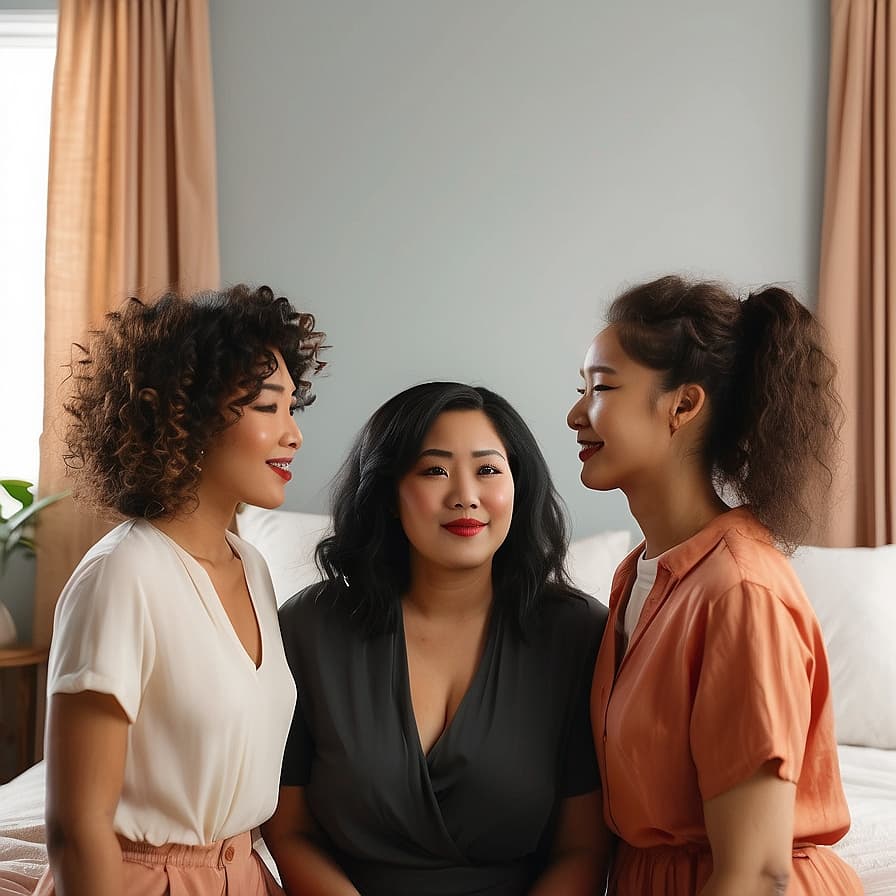
Generate Ryukyuans AI Content
Use this ethnicity's phenotype data to create AI-generated content with accurate physical traits and cultural context.
Open Creator Studio