Amis Erotic
Taiwan (Taitung and Hualien Counties)
Austronesian / Formosan / Amis
Animism, Christianity
East Asia
About Amis People
The Amis are the largest of Taiwan's recognized Indigenous peoples, concentrated along the island's eastern coast and in the long Rift Valley that runs between the Coastal Range and the Central Mountains. Their territory is a thin ribbon of Pacific shoreline, river plains, and steep interior — a geography that has shaped a people who fish, farm wet rice, and historically moved between sea and floodplain rather than into the highlands favored by their inland neighbors. Most Amis live in Hualien and Taitung Counties, with sizable communities now in Taipei and Kaohsiung, the result of decades of labor migration toward Taiwan's industrial cities.
The Amis language belongs to the Formosan branch of Austronesian — the same vast family that reaches across the Philippines, Indonesia, Madagascar, and the Pacific. Linguists generally treat Taiwan as the Austronesian homeland, which makes Amis and its sister Formosan languages something close to the family's oldest surviving cousins. Within Amis itself there are recognized regional varieties — broadly grouped as Northern, Central, Coastal, and Southern — and the differences between them are real enough that speakers from opposite ends of the territory sometimes meet halfway in Mandarin.
Amis society is matrilineal in a way that still meaningfully structures inheritance and household life: property and house-name pass through the mother, and a married man traditionally moves into his wife's family home. Cutting across that female-anchored domestic order is a male age-grade system, in which men of the same cohort move together through named ranks over a lifetime, with collective duties to the village at each stage. The two systems are not in tension; they divide the world between them.
The annual Ilisin — usually translated as the Harvest Festival, held in July or August depending on the village — is the public center of Amis life, a multi-day event of ranked dancing, singing, and the formal advancement of age-grades. It is also where the contemporary politics of being Indigenous in Taiwan are most visible: the festival is simultaneously a religious observance, a tourist attraction the villages themselves manage carefully, and a yearly assertion that the community is still here. Christianity, mostly Presbyterian and Catholic, arrived in the twentieth century and now coexists with older animist practice rather than replacing it; many families move between the two without much sense of contradiction.
Typical Amis Phenotypes
Reference for AI generation — hair, eyes, skin, facial structure, build
The Amis are an Austronesian indigenous people of eastern Taiwan, and their phenotype sits visibly apart from Han Taiwanese — closer in many features to other Austronesian populations of the Philippines and Pacific than to mainland East Asians. Hair is uniformly black to very dark brown, predominantly straight to gently wavy, and typically thick and coarse. Wave and loose curl appear more often than in Han populations, a holdover from the broader Austronesian range. Premature graying is uncommon; men retain dense hairlines later than is typical in Han Taiwanese.
Eye color runs dark brown to near-black. The epicanthic fold is present but often softer and less pronounced than in northern East Asian groups — many Amis show a partial fold or a clearly defined upper-lid crease, giving the eyes a rounder, more open set. Brow ridges are slightly stronger than the Han Taiwanese average.
Skin tones cluster in Fitzpatrick III–IV, leaning warm and bronze-toned rather than the cooler ivory common in Han populations. Generations of coastal and agricultural life along the Pacific side of the island deepen this; many older Amis carry a sun-darkened reddish-brown cast. Undertones are golden to coppery.
Facial structure is the clearest tell. Noses are broader and higher-bridged than the East Asian regional average — a distinctly Austronesian nose, with wider alar base and more projection. Lips are fuller, particularly the lower lip. Cheekbones are high and wide-set, jawlines square and strong, faces broader through the midface than tapering. Olympic decathlete Yang Chuan-kwang is a recognizable anchor for these proportions.
Build trends athletic and well-muscled. Amis men average slightly taller than Han Taiwanese — the group's overrepresentation in Taiwan's professional baseball, weightlifting, and track rosters reflects genuine anthropometric tendencies toward muscle density, broader shoulders, and stronger lower-body mass. Women carry similar proportional sturdiness, with fuller hips and thighs than the Han Taiwanese mean. Sub-group variation across the northern, central, and southern Amis is modest and mostly clinal rather than categorical.
Data depth
72/100Coverage of image-grounded phenotype observations · drives AI generation diversity
- Sample size
- 27/40· 21 images
- Image quality
- 30/30· 62% high
- Confidence
- 15/20· mean 0.83
- Source diversity
- 0/10· wikipedia
- ·Modest sample (n<25)
- ·Wikipedia-only source — not population-representative
Observed Distribution — Image Sample
Empirical observations from analyzed photographs · supplementary signal, not population truth
Sample: 21 images analyzed (21 wikipedia). Quality: 13 high, 8 medium, 0 low, 0 very_low. Avg analyzer confidence: 0.83.
Skin tone (Fitzpatrick): II (5%), III (24%), IV (71%)
Hair color: black (86%), gray/white (10%), light/medium brown (5%)
Hair texture: straight (86%), wavy (5%), curly (5%), shaved (5%)
Eye color: dark brown (95%), unclear (5%)
Epicanthic fold: 100% present, 0% absent, 0% unclear
Caveats: Sample size 21 is modest — secondary patterns may not be reliable. Sample is 100% Wikipedia notable people — skews toward male, public-life, and modern figures, not population-representative.
Last aggregated: May 7, 2026
Explore phenotype categories
Structured taxonomy with peer-reviewed scales · 22 anatomical categories
Notable Amis People
30 reference figures — sourced from Wikipedia
- A-Lin — singer, songwriter
- Ngayaw Ake — baseball player
- Yu Chang — baseball player
- Lin Chih-chieh — basketball player
- Chen Chih-yuan — baseball player
- Yang Chuan-kwang — Olympic decathlete
- Kuo Dai-chi — baseball player
- Mayaw Dongi — Minister of Council of Indigenous Peoples (2013–2016)
- Difang and Igay Duana — husband-and-wife folk music duo
- Van Fan — singer, actor
- Ehlo Huang — actor and member of pop group 183 Club
- Kuo Hsing-chun — weightlifter and Olympic gold medalist
- Ilid Kaolo — singer and songwriter
- Tseng Li-cheng — 2012 Olympics Taekwondo bronze medalist
- Show Lo — singer, actor, host
- Lin Man-ting — football and futsal player
- Ati Masaw — baseball player
- Teruo Nakamura — Taiwan-born soldier of the Imperial Japanese Army and the last Japanese holdo…
- Kawlo Iyun Pacidal — member of Legislative Yuan
- Kolas Yotaka — member of Legislative Yuan and Spokesperson for the Executive Yuan and the Of…
- Icyang Parod — Minister of Council of Indigenous Peoples
- Yang Sen — baseball player
- Sufin Siluko — member of Legislative Yuan
- Suming — actor, singer, songwriter. His music features elements from traditional Amis …
- Li Tai-hsiang — composer and folk songwriter
- Chin-hui Tsao — baseball player
- Dai-Kang Yang — baseball player
- Wei-Chung Wang — baseball player
- Wayne Huang — singer, actor, host
- Natsuko Lariyod — singer, songwriter, and illustrator from the music duo Collage, who have seve…
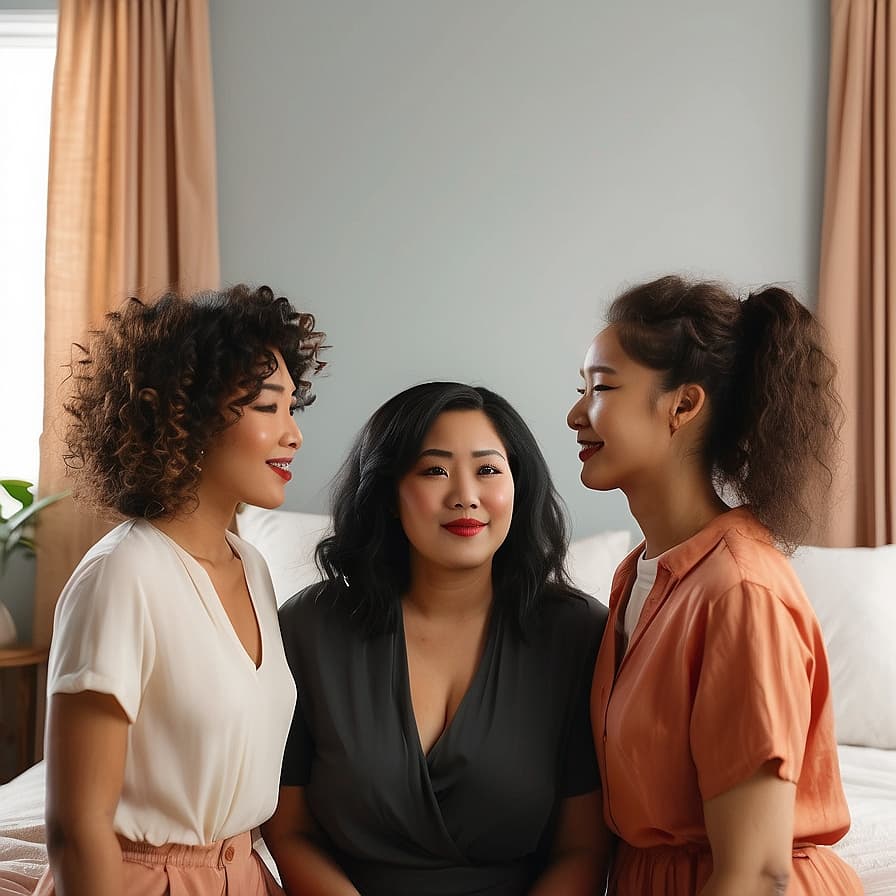

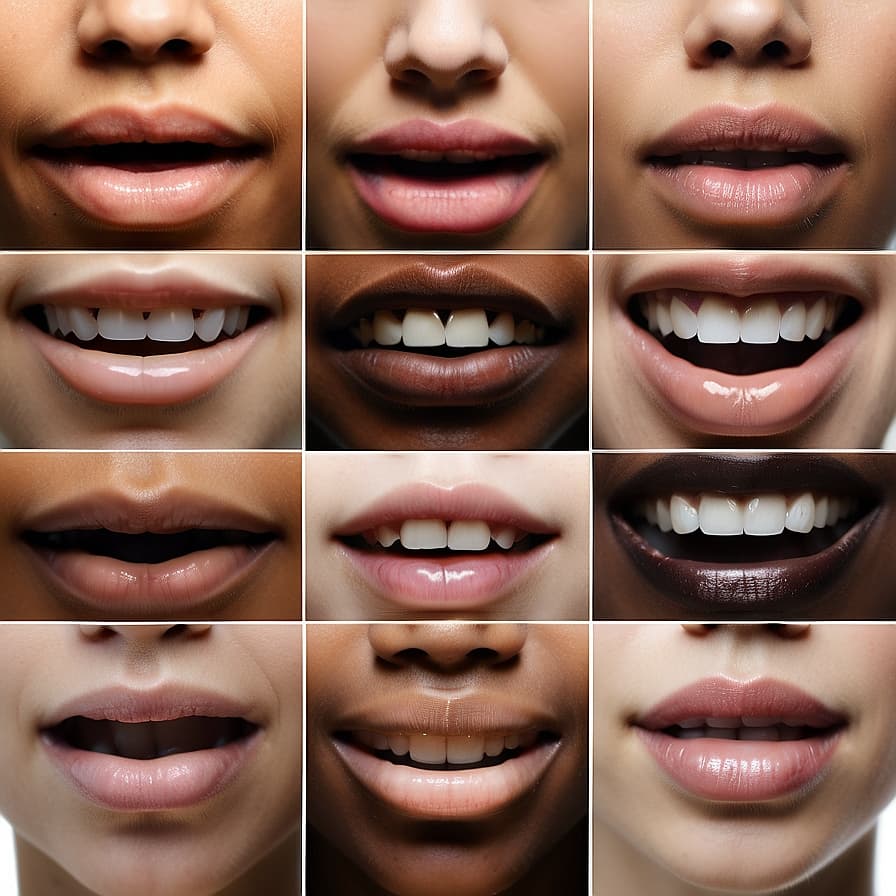
Generate Amis AI Content
Use this ethnicity's phenotype data to create AI-generated content with accurate physical traits and cultural context.
Open Creator Studio