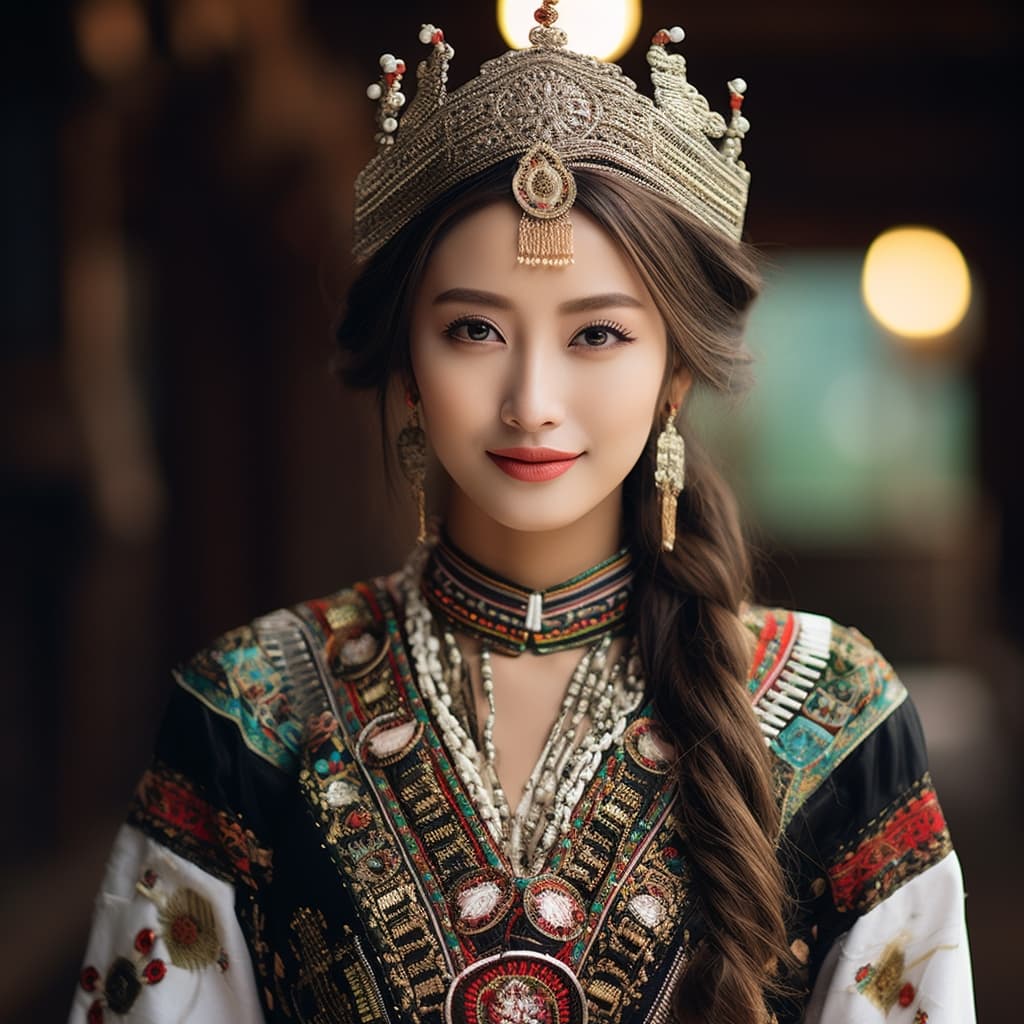
Li Erotic
Hainan (China)
Kra–Dai / Hlai
Islam / Sunni Islam
East Asia
About Li People
The Li are the indigenous people of Hainan, the large tropical island off China's southern coast, and their presence there long predates Han settlement of the lowlands. Linguists place their language, Hlai, inside the Kra–Dai family — distant cousins of Thai and Lao — but Hlai sits on its own branch, separated from its mainland relatives by what may be three thousand years of island isolation. The split is deep enough that Hlai is largely unintelligible to any Tai speaker; even among the Li themselves, the five main subgroups (Ha, Qi, Run, Sai, and Meifu) speak varieties distinct enough that they often switch to Mandarin to talk across them.
As Han migration filled the coast, the Li were pushed into the forested mountains of the interior — Wuzhi Shan and the surrounding ranges — where they kept to swidden agriculture and to longhouses with the overturned-boat roofline that became a regional signature. Their relationship with successive Chinese dynasties was uneven and frequently combustible; Li uprisings against Ming and Qing authority recur through the imperial record, and the autonomy granted to the modern Li and Miao prefecture is partly an inheritance of that long friction.
What outsiders most often associate with the Li today is the textile tradition. Li brocade is one of the oldest continuous weaving traditions in China, recognized by UNESCO as intangible heritage in need of safeguarding, and its patterns function as genealogy and clan signature as much as ornament. Less visible, and now nearly gone, is the practice of facial and body tattooing on women: a coming-of-age marking that thinned out under twentieth-century discouragement and survives mostly on the faces of grandmothers in remote villages — an archive disappearing in real time. Spiritual life has historically turned on ancestor veneration and nature spirits worked through village ritualists, with later Buddhist and folk Daoist overlays around the edges.
Modern Li life is split. Younger generations move down to the coastal cities for work in Sanya's tourism economy; the mountains hold the older speakers, the looms, and the rapidly thinning memory of what an unassimilated Li village looked like a century ago.
Typical Li Phenotypes
Reference for AI generation — hair, eyes, skin, facial structure, build
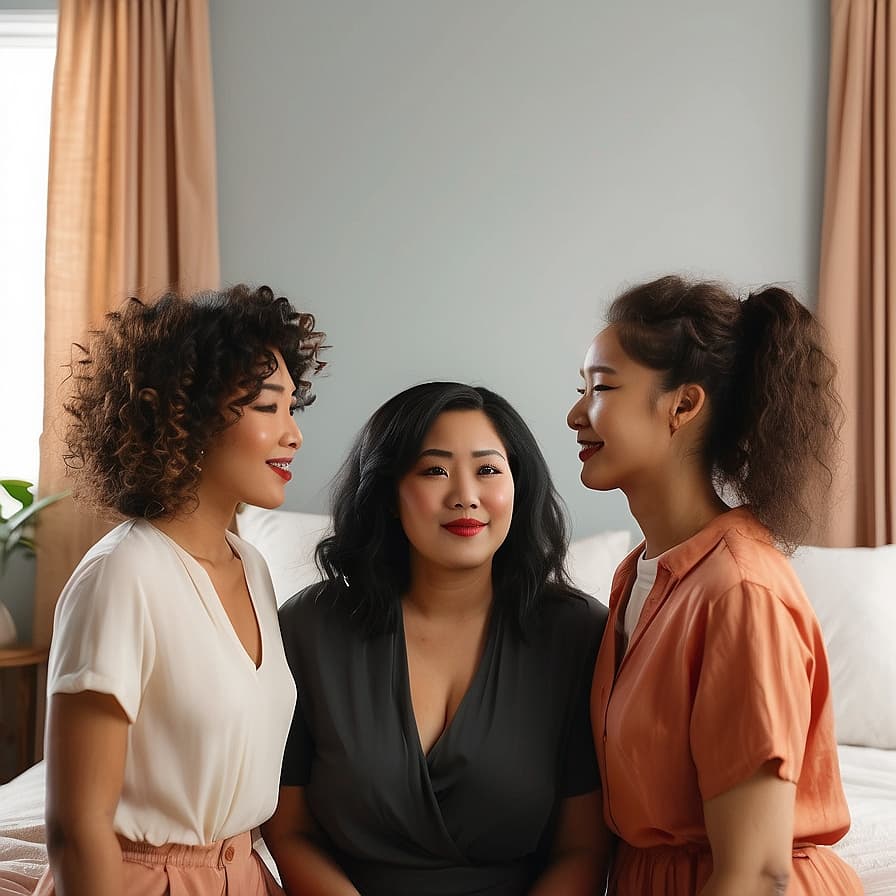
The Li are an indigenous Kra–Dai-speaking population of Hainan island, and their phenotype reflects long isolation from mainland Han populations alongside affinities with Tai and Austronesian groups of southern China and Southeast Asia. They sit at the warmer, more tropical end of the East Asian phenotype spectrum — generally shorter, darker-skinned, and rounder-featured than northern Han, with a softer, more rounded craniofacial profile than mainland southern Chinese.
Hair is uniformly black or very dark brown, coarse in shaft diameter, and overwhelmingly straight to gently wavy; pronounced curl is rare. Greying tends to come late. Eyes are dark brown to near-black, often appearing fully black at distance. The epicanthic fold is near-universal but typically lighter and less hooded than in northern East Asian populations, giving an almond rather than narrow eye shape; double eyelids are more common among the Li than among Han Chinese, particularly in the southern Qi and Run subgroups.
Skin tones cluster in Fitzpatrick III to IV, running warmer and more golden-brown than the lighter cooler-toned palette of northern China. Year-round sun on Hainan deepens this in rural and highland populations toward a tanned ochre-brown, while urban Li women trend lighter. Undertones are warm yellow to olive, rarely pink.
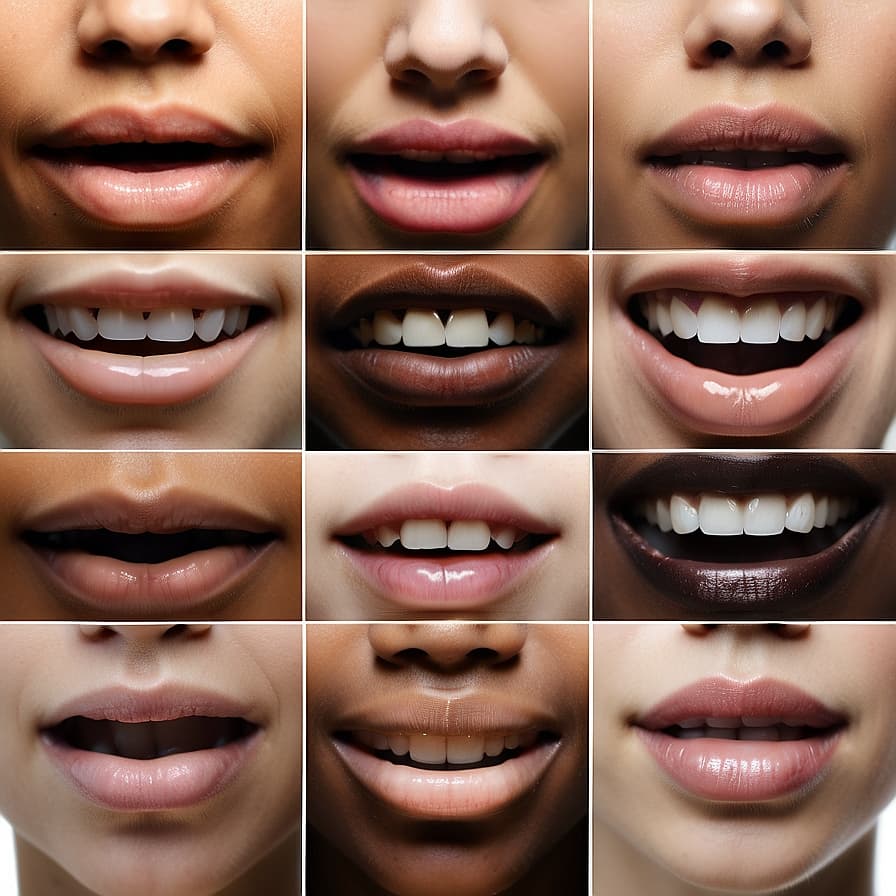
Facial structure favors a broad, low-bridged nose with rounded tip and moderate alar width — flatter and wider than northern Chinese norms. Lips are medium-full, fuller than typical Han, with a defined cupid's bow. Cheekbones are present but softened by fuller cheek fat, and jawlines are rounded rather than angular, producing a heart-to-oval face shape.
Build is compact. Adult women average roughly 152–158 cm and men 162–168 cm — short by East Asian standards. Frames are slight-boned with narrow shoulders, modest bust, and a tendency toward slim-to-petite proportions; rural Li retain very lean muscular builds from agricultural work. Among the five recognized subgroups — Qi, Ha, Run, Sai, and Meifu — the Run of central Hainan tend to be the shortest and most rounded-featured, while the Ha of the lowlands skew slightly taller and lighter-skinned through historical Han contact.
Data depth
0/100Coverage of image-grounded phenotype observations · drives AI generation diversity
- Sample size
- 0/40· 0 images
- Image quality
- 0/30· 0% high
- Confidence
- 0/20
- Source diversity
- 0/10
- ·No image observations yet
Explore phenotype categories
Structured taxonomy with peer-reviewed scales · 22 anatomical categories
Generate Li AI Content
Use this ethnicity's phenotype data to create AI-generated content with accurate physical traits and cultural context.
Open Creator Studio