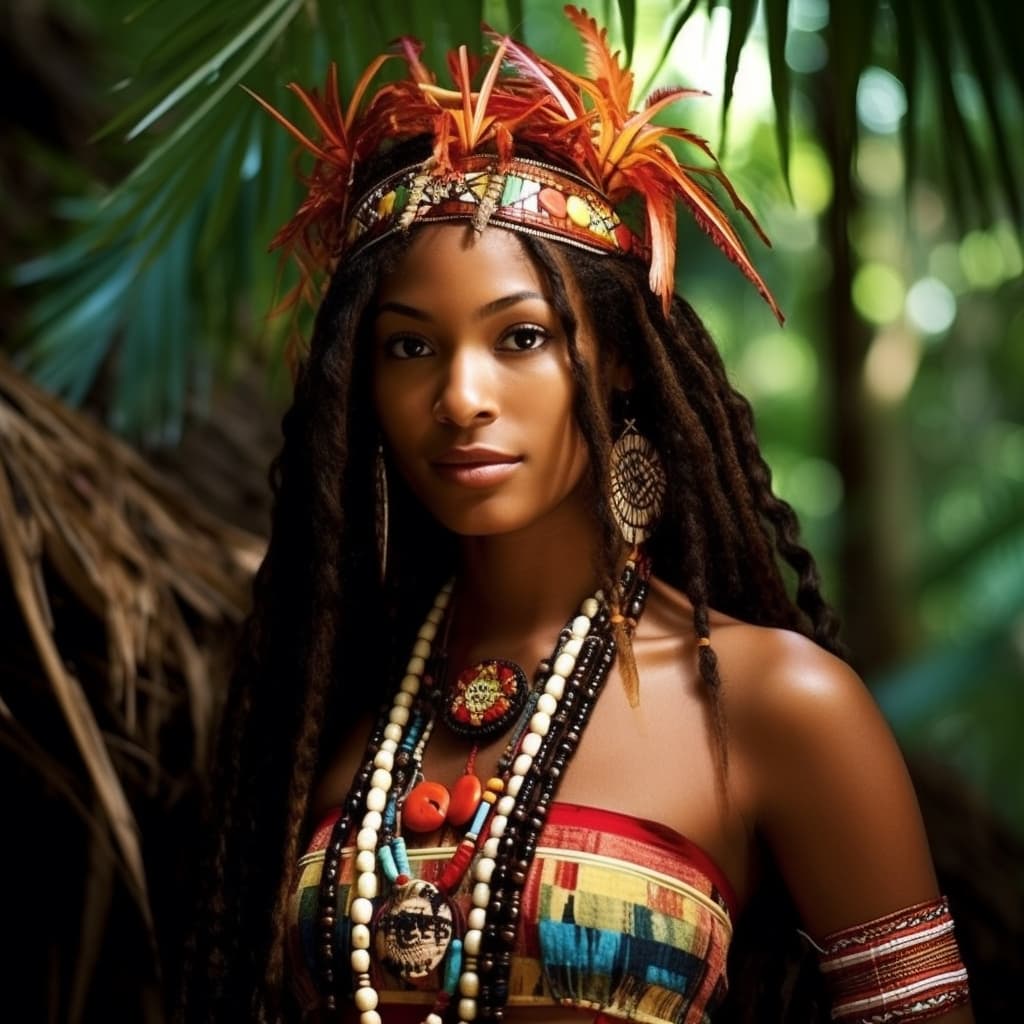
Taíno Erotic
Cuba, Dominican Republic, Haiti, Jamaica, Puerto Rico, Bahamas
Arawakan / Ta-Arawakan / Taíno
Folk religion
Caribbean
About Taíno People
The Taíno were the people Columbus met first, and the catastrophe of that meeting has shaped how they've been remembered ever since — as the prologue to someone else's history, a population presumed extinct within a few generations of 1492. That framing is wrong in an interesting way. Taíno descent runs through the modern populations of Puerto Rico, the Dominican Republic, Cuba, and the wider Antilles in measurable amounts; the cultural inheritance, in foodways and vocabulary and rural practice, is even more pervasive. Words like hammock, hurricane, barbecue, canoe, tobacco, and cassava all entered European languages from Taíno. The people did not vanish so much as get folded, violently and incompletely, into the populations that came after.
Before contact, the Taíno occupied the Greater Antilles and the Bahamas and spoke a language belonging to the Arawakan family — the same broad family whose other branches stretch across northern South America and into the Amazon, hinting at the seaborne migration up the Lesser Antilles that brought their ancestors north. Society was organized into chiefdoms called cacicazgos, headed by a cacique who could be male or female and whose authority was hereditary but mediated by councils of elders. The economy ran on cassava — bitter manioc, processed to remove its cyanide — supplemented by maize, sweet potato, fish, and the small mute dog they kept for meat. Villages clustered around a central plaza used for the batey, a rubber-ball game played between teams that doubled as ritual and diplomacy.
Religious life centered on zemís, ancestral and nature spirits represented by carved figures of stone, wood, cotton, or bone, kept in the home or in caves and consulted through the cohoba ceremony — a trance induced by inhaling powdered seeds of the Anadenanthera tree through a forked tube. The behique, a healer-priest, conducted these sessions and treated illness as spiritual disorder. After contact, this religious world did not simply disappear; elements of it merged into the syncretic folk practice of the rural Caribbean, where saints' days carry older resonances and certain plants and ceremonies retain pre-Columbian logic underneath a Catholic surface. A self-conscious Taíno revival movement, particularly strong in Puerto Rico and among diaspora communities, has been pressing since the late twentieth century for recognition that the past tense was always premature.
Typical Taíno Phenotypes
Reference for AI generation — hair, eyes, skin, facial structure, build
The Taíno phenotype today is essentially admixed — pure Taíno populations were largely destroyed by the early colonial period, but the genetic and morphological legacy persists strongly across the Greater Antilles, particularly in rural Puerto Rico, eastern Cuba, and the Dominican interior. Recent studies of mitochondrial DNA in Puerto Rico show roughly 60% of the population carries indigenous maternal lineages, and the visible Taíno traits cluster in recognizable combinations.
Hair is typically straight to gently wavy, jet black or very dark brown, coarse to medium in texture, and grows thick and heavy. The hairline tends to sit low and even, with minimal recession in older men. Body hair is sparse — light forearms, thin or absent chest hair, modest facial hair that fills in unevenly. Eyes range from dark brown to near-black, almond-shaped, set under a smooth, often slightly heavy upper lid. A true epicanthic fold is uncommon but a soft inner-corner crease appears in a noticeable minority, a holdover from the Siberian-Beringian ancestry shared with other Indigenous American groups.
Skin tone runs Fitzpatrick III–V, with warm copper, bronze, and reddish-brown undertones rather than the olive-yellow of Mestizo populations or the cool tones common in admixed Afro-Caribbeans. Sun exposure deepens the tone evenly without much freckling.
The face is broad and round to softly diamond-shaped, with high, wide cheekbones and a relatively short vertical midface. Noses are medium-width with a low-to-medium bridge and rounded, fleshy tips — narrow aquiline noses are rare. Lips are medium-full with a defined cupid's bow, neither thin nor markedly everted. Jawlines are squared but soft, chins modest.
Build is short to medium-short — historical accounts and modern anthropometry put stature toward the lower end of Caribbean averages, around 5'2"–5'5" for women and 5'5"–5'8" for men. Bodies are compact and stocky with short limbs relative to torso, broad shoulders on men, and a tendency toward pear-shaped fat distribution in women. Where you see the phenotype most cleanly preserved is the Cordillera Central of the Dominican Republic and the central mountains of Puerto Rico, where colonial-era intermixture was lightest.
Data depth
0/100Coverage of image-grounded phenotype observations · drives AI generation diversity
- Sample size
- 0/40· 0 images
- Image quality
- 0/30· 0% high
- Confidence
- 0/20
- Source diversity
- 0/10
- ·No image observations yet
Explore phenotype categories
Structured taxonomy with peer-reviewed scales · 22 anatomical categories
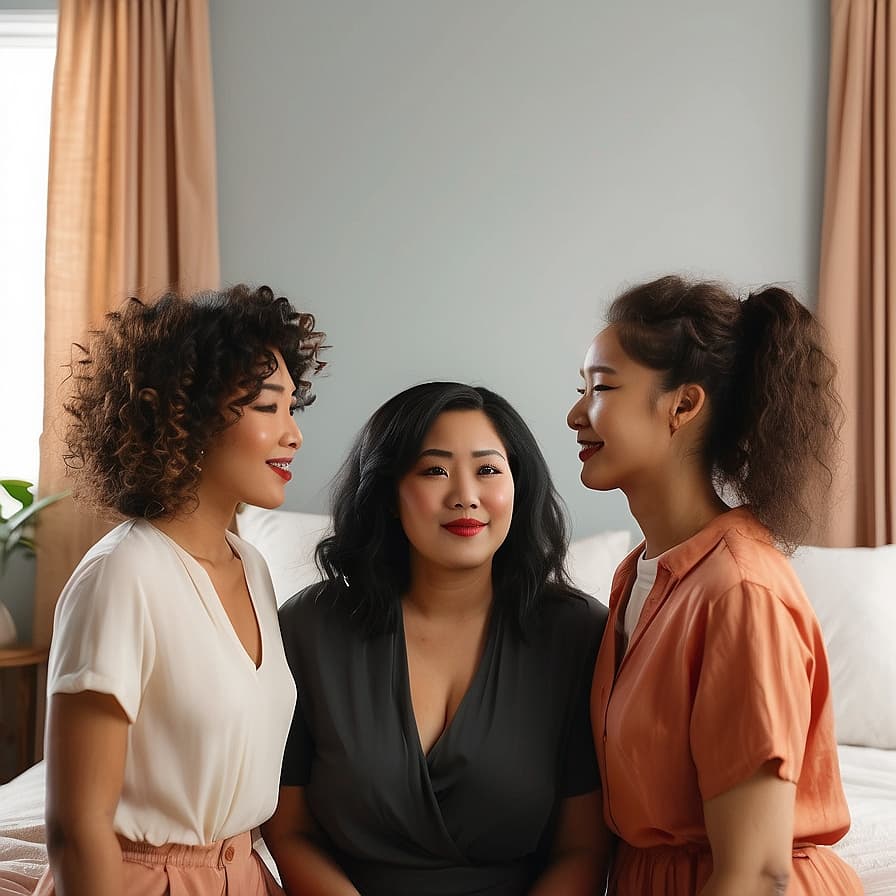

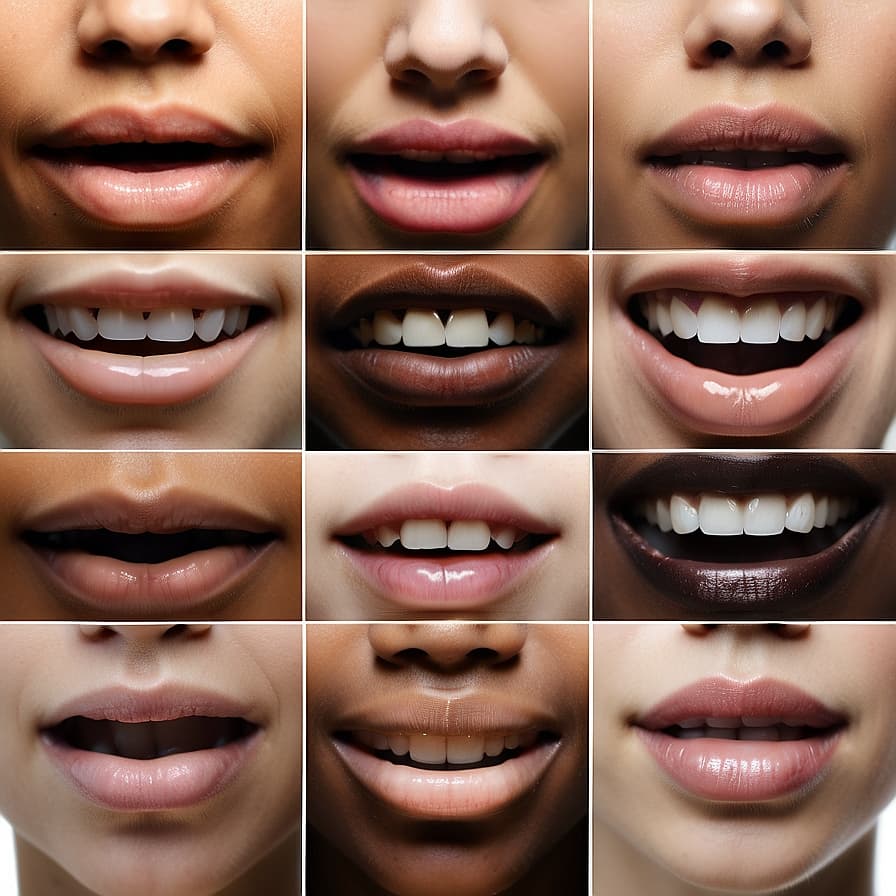
Generate Taíno AI Content
Use this ethnicity's phenotype data to create AI-generated content with accurate physical traits and cultural context.
Open Creator Studio