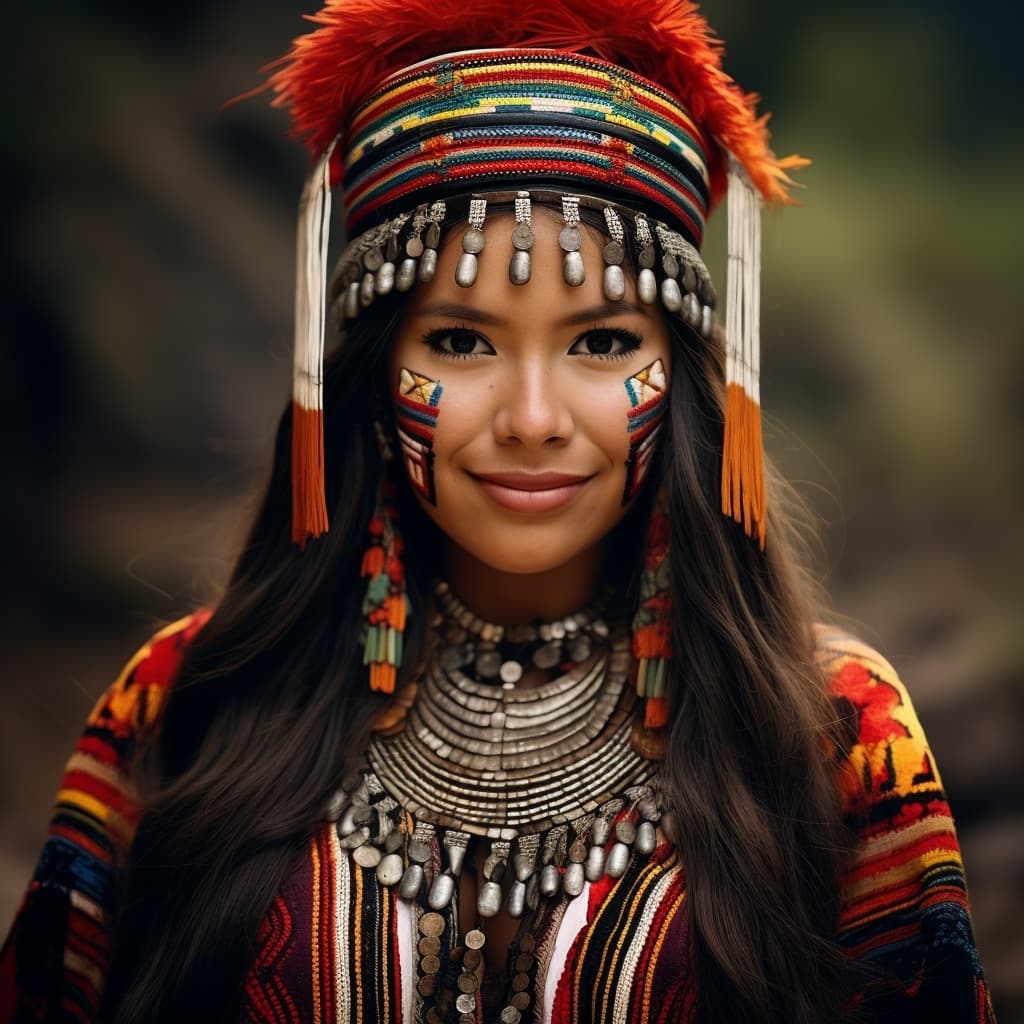
Quechua Erotic
Peru, Bolivia, Ecuador
Quechuan
Christianity / Catholicism
Yaru, Cusco, Ayacucho, along with Mestizos such as Peruvians, Ecuadorians, and Bolivians
South America
About Quechua People
The Quechua are not one people in the tidy sense — they are the inheritors of a language, and through that language, of an Andean way of organizing life that predates the Inca and outlasted them. Roughly eight to ten million speakers are spread across the high country of Peru, Bolivia, and Ecuador, with smaller communities in Argentina, Chile, and Colombia. What binds them is Runasimi, "the people's speech," a family of mutually distant varieties — Cusco-Collao in the southern Peruvian highlands, Ayacucho in the central south, the Yaru and Wanka dialects of the central sierra, Kichwa in Ecuador and the Amazonian foothills. A speaker from Cusco and a speaker from Quito can struggle to understand each other; linguists treat Quechuan less as one language than as a small family, comparable in internal distance to the Romance languages.
The homeland is vertical. Quechua communities stack themselves up the Andes from valley floors at 2,500 metres to herding camps above 4,000, and the old Andean economy depended on a household having access to several altitudes at once — maize down low, potatoes and quinoa in the middle bands, alpacas and llamas on the puna grasslands. That principle, which the anthropologist John Murra called the vertical archipelago, still shapes how rural families distribute labour between siblings and across seasons. Reciprocal labour — ayni between equals, minka for collective work — is not folklore but a working institution, the way a roof gets put on or a field gets harvested.
Religion is Catholic on the surface and older underneath. Most Quechua are baptized Catholics, and saints' days organize the rural calendar; but offerings to the Pachamama, the earth, and to the apus, the mountain spirits who watch over each district, are made in the same breath as the rosary. Coca leaves are read, poured, and chewed as part of that conversation, not as a recreational substitute. The colonial rupture is the inflection point that still defines the group politically: the Spanish dismantled the Inca state in the 1530s but kept Quechua as an administrative and missionary language, which is why it spread further under colonialism than it had under the Incas. The Túpac Amaru II rebellion of 1780–81 and the indigenous mobilizations of the late twentieth century — Bolivia under Evo Morales, the rondas campesinas of Peru — are episodes in the same long argument about who the highlands belong to. The Quechua-speaking world today is rural and urban at once: a grandmother in a pollera in Puno, her grandson coding in Lima, both still answering to the same word for kinship.
Typical Quechua Phenotypes
Reference for AI generation — hair, eyes, skin, facial structure, build
Quechua phenotype is shaped by millennia of high-altitude adaptation across the Andes, and the structural signatures are unusually consistent for a population this geographically spread. Hair is almost uniformly black or near-black, straight to gently coarse, with very low rates of waviness and effectively no natural blondism or redness in unadmixed individuals. Graying tends to come late. Body hair and facial hair are sparse, with thin beard growth in men — a trait shared with most Indigenous American populations.
Eyes run dark brown to black, occasionally a warm amber-brown in highland Cusco and Ayacucho lineages. A partial epicanthic fold is common, more pronounced in Altiplano Qolla and southern Cusco populations than in Ecuadorian Cañari-descended Quechua, where the fold often softens. Eye shape is generally almond, set under a low, flat brow ridge.
Skin sits in the Fitzpatrick III–IV range, a coppery brown with warm red-yellow undertones — what photographers like Martín Chambi captured as the distinct Andean tone. Sun-exposed cheeks frequently show a deep ruddy flush from chronic UV at altitude, and weathered, sun-cured skin on older highlanders is characteristic enough to be a phenotype marker on its own.
Facial structure is the most distinctive element. Cheekbones are broad and high, the midface wide, the jaw squared rather than tapering. Noses are typically straight or convex with a moderately high bridge and medium alar width — the so-called "Inca nose" seen in Cusco lineages is a real and recurring form, with a strong straight bridge and a slightly downturned tip. Lips are medium-full, well-defined.
Build reflects high-altitude selection. Stature is short — men commonly 5'2"–5'5", women 4'10"–5'1" — with notably enlarged thoracic volume, deep chests, and dense lower-body musculature for thin-air endurance. Hemoglobin levels and lung capacity in unadmixed Quechua are among the highest documented in any human population. Mestizo Peruvians, Bolivians, and Ecuadorians soften every one of these traits — taller stature, lighter skin, mixed eye and hair textures — in proportion to Iberian admixture.
Data depth
69/100Coverage of image-grounded phenotype observations · drives AI generation diversity
- Sample size
- 29/40· 24 images
- Image quality
- 30/30· 67% high
- Confidence
- 10/20· mean 0.65
- Source diversity
- 0/10· wikipedia
- ·Modest sample (n<25)
- ·Wikipedia-only source — not population-representative
Observed Distribution — Image Sample
Empirical observations from analyzed photographs · supplementary signal, not population truth
Sample: 24 images analyzed (24 wikipedia). Quality: 16 high, 6 medium, 1 low, 1 very_low. Avg analyzer confidence: 0.65.
Skin tone (Fitzpatrick): II (4%), III (13%), IV (63%), V (4%), unclear (17%)
Hair color: black (63%), gray/white (21%), unclear (17%)
Hair texture: straight (63%), wavy (25%), unclear (13%)
Eye color: dark brown (75%), green (4%), unclear (21%)
Epicanthic fold: 33% present, 42% absent, 25% unclear
Caveats: Sample size 24 is modest — secondary patterns may not be reliable. Sample is 100% Wikipedia notable people — skews toward male, public-life, and modern figures, not population-representative.
Last aggregated: May 7, 2026
Explore phenotype categories
Structured taxonomy with peer-reviewed scales · 22 anatomical categories
Notable Quechua People
32 reference figures — sourced from Wikipedia
- Chanka people — The Chanka people lived in the Huancavelica, Ayacucho, and Apurímac regions o…
- Huanca people — The Huanca people of the Junín Region of Peru spoke Quechua before the Incas …
- Inca — The Inca established the largest empire of the pre-Columbian era.
- Chincha — The Chincha, an extinct merchant kingdom of the Chincha Islands of Peru.
- Qolla — The Qolla inhabited the Potosí, Oruro, and La Paz departments of Bolivia.
- Cañari — The Cañari of Ecuador adopted the Quechua language from the Inca.
- Túpac Amaru II — Revolutionary
- Angélica Mendoza de Ascarza — Peruvian human rights activist
- Kimberly Barzola — American community organizer and artist
- Benjamin Bratt — American actor
- Manco Cápac — Sapa Inca
- Luzmila Carpio — Bolivian musician
- Andrónico Rodríguez — Bolivian trade unionist and politician
- Martín Chambi — Peruvian photographer
- Renata Flores Rivera — Peruvian musician
- Oswaldo Guayasamín — Ecuadorian painter
- Ollanta Humala — former President of Peru
- Antauro Humala — Peruvian ethnocacerist
- Josh Keaton — American actor
- Q'orianka Kilcher — American Actress
- Nancy Iza Moreno — Kichwa leader
- Leonidas Iza — Ecuadorian activist and Indigenous leader
- Delfín Quishpe — Ecuadorian musician and politician
- Tarcila Rivera Zea — Peruvian activist
- Izkia Siches — Chilean physician and politician
- Magaly Solier — Peruvian actress and musician
- Francisco Tito Yupanqui — Sculptor
- Alejandro Toledo — former President of Peru
- Edison Flores — Peruvian footballer
- Renato Tapia — Peruvian footballer
- Tania Pariona Tarqui — Peruvian politician
- Secret of the Incas — movie with conversation and singing in Quechua


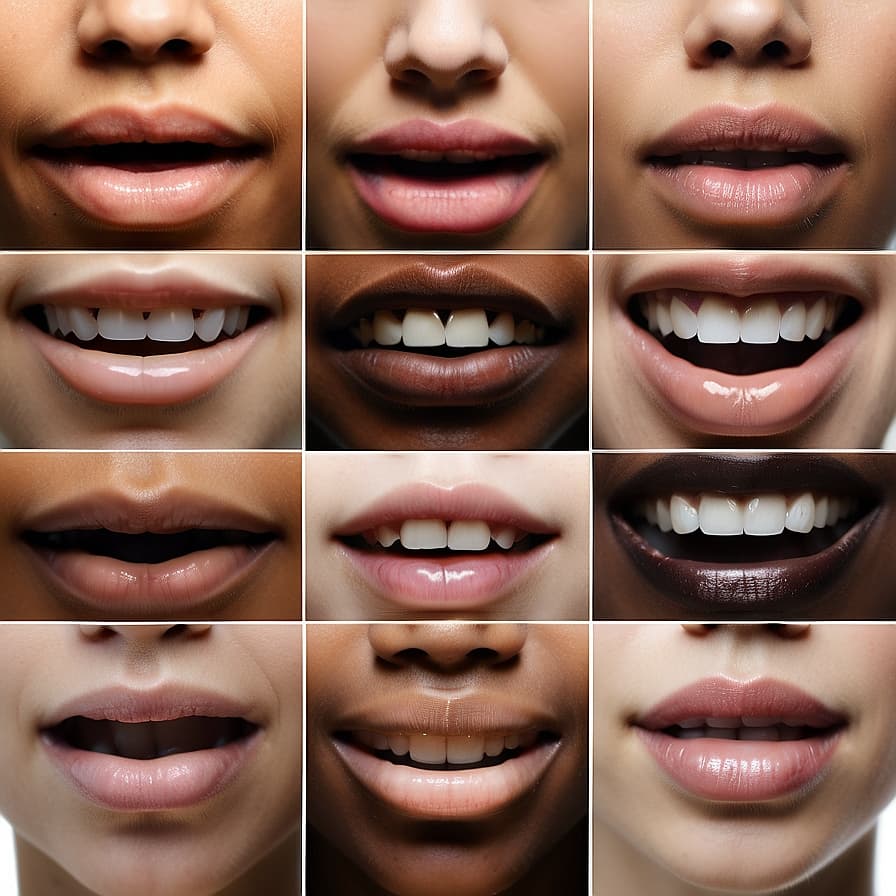
Generate Quechua AI Content
Use this ethnicity's phenotype data to create AI-generated content with accurate physical traits and cultural context.
Open Creator Studio