Samoans Erotic
Samoan Islands (Samoa, American Samoa)
Austronesian / Polynesian / Samoan
Christianity
American Samoans
Polynesia
About Samoans People
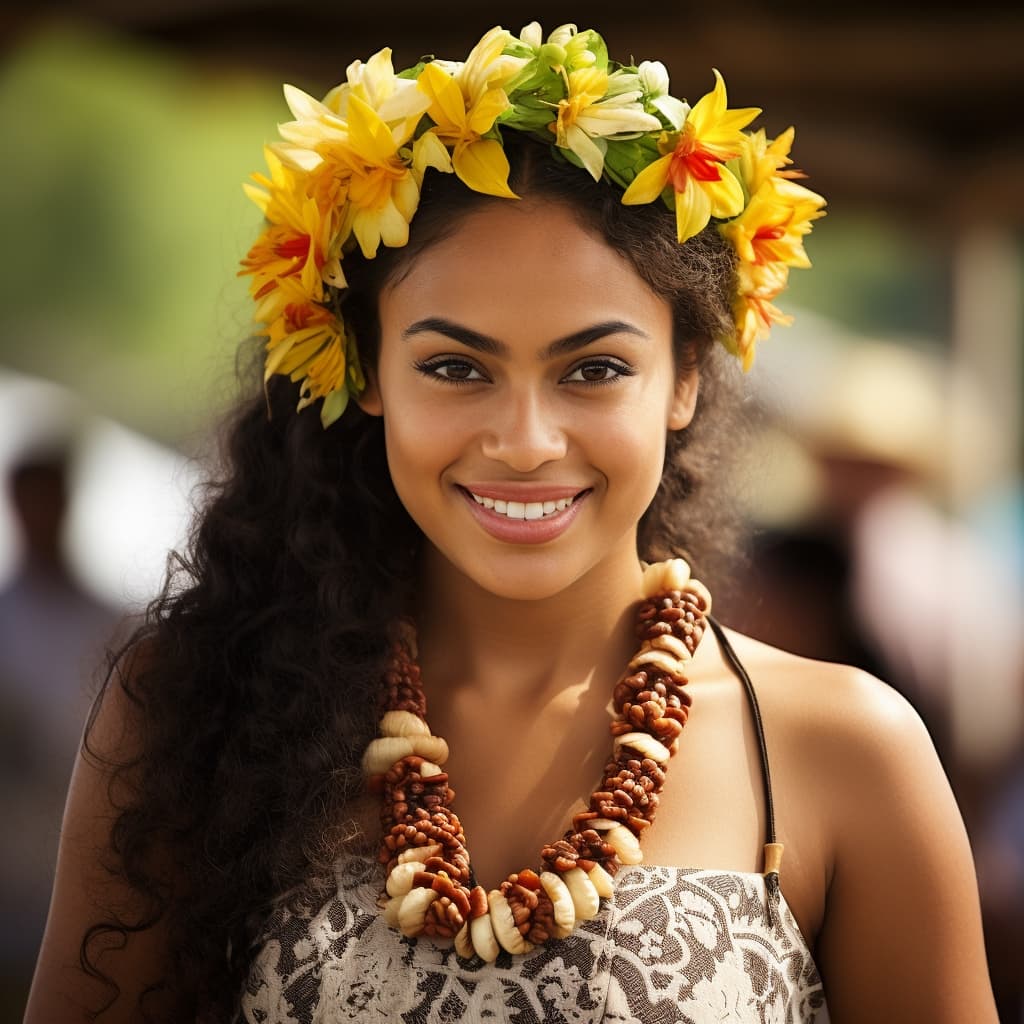
Samoans are the people of the Samoan archipelago, a chain of volcanic islands at the heart of western Polynesia, now divided politically between the independent state of Samoa and the unincorporated U.S. territory of American Samoa. The split is recent and administrative; the people on either side of the line are one nation in any meaningful sense, sharing language, kin networks, and the social system known as fa'a Samoa — "the Samoan way." Samoan society is organized around the 'aiga, the extended family, which is led by a matai, a titled chief whose authority is conferred by family consensus rather than inherited outright. Villages are governed by councils of these matai, and the title system reaches into every part of public life: land tenure, dispute resolution, church leadership, even who speaks at a funeral.
The Samoan language belongs to the Polynesian branch of Austronesian and is closely related to Tongan, Tokelauan, and the languages of eastern Polynesia, though Samoans and linguists alike consider Samoa one of the older settled hearths from which much of Polynesia was populated. The language preserves a distinction between everyday speech and a formal oratorical register, gagana fa'aaloalo, used when addressing chiefs and on ceremonial occasions — a working diglossia rather than a museum piece. Christianity, brought by missionaries in the nineteenth century, took deep root and is now near-universal; Sunday in a Samoan village is genuinely quiet, and the village pastor stands alongside the matai as a figure of authority. The faith has been absorbed into the older framework rather than replacing it: church, family, and chiefly title operate in concert.
Samoa is also the home of tatau, the tattoo tradition that gave the English language its word for the practice. The men's pe'a covers the body from waist to knee and is still applied by hand with bone combs by hereditary tufuga; the women's malu is finer and runs the thighs. These are not decorative — they are the visible marks of a person who has accepted adult obligations to family and village. A large Samoan diaspora now lives in New Zealand, Australia, Hawaii, and the U.S. mainland, and remittance flows back to the islands are a real part of the domestic economy. The culture travels with them: rugby, church choirs, and the matai system all reappear, adapted, wherever Samoans settle in numbers.
Typical Samoans Phenotypes
Reference for AI generation — hair, eyes, skin, facial structure, build
Samoans carry one of Polynesia's most structurally distinctive builds. Anthropometric surveys consistently rank Samoans among the largest-framed populations on earth — broad shoulders, deep ribcages, thick wrists and ankles, and dense skeletal mass that reads even on lean individuals. Average male stature sits around 5'9"–6'0", with the muscular, large-bodied physique that has made Samoans famously over-represented in rugby and the NFL relative to population size. Body composition tends toward high lean mass with naturally generous subcutaneous fat distribution; women typically present full hips, thighs, and bust with a softer waist definition rather than a sharp hourglass.
Hair is almost uniformly black or near-black, thick and coarse in texture, ranging from poker-straight to loosely wavy. Tight curls are uncommon and usually signal mixed ancestry. Greying tends to come late. Eyes are dark brown to black, set under a moderate brow with a subtle, partial epicanthic fold in many individuals — less pronounced than in East Asian populations but more present than in Melanesian or European faces, giving a slightly almond eye shape with a softened inner corner.
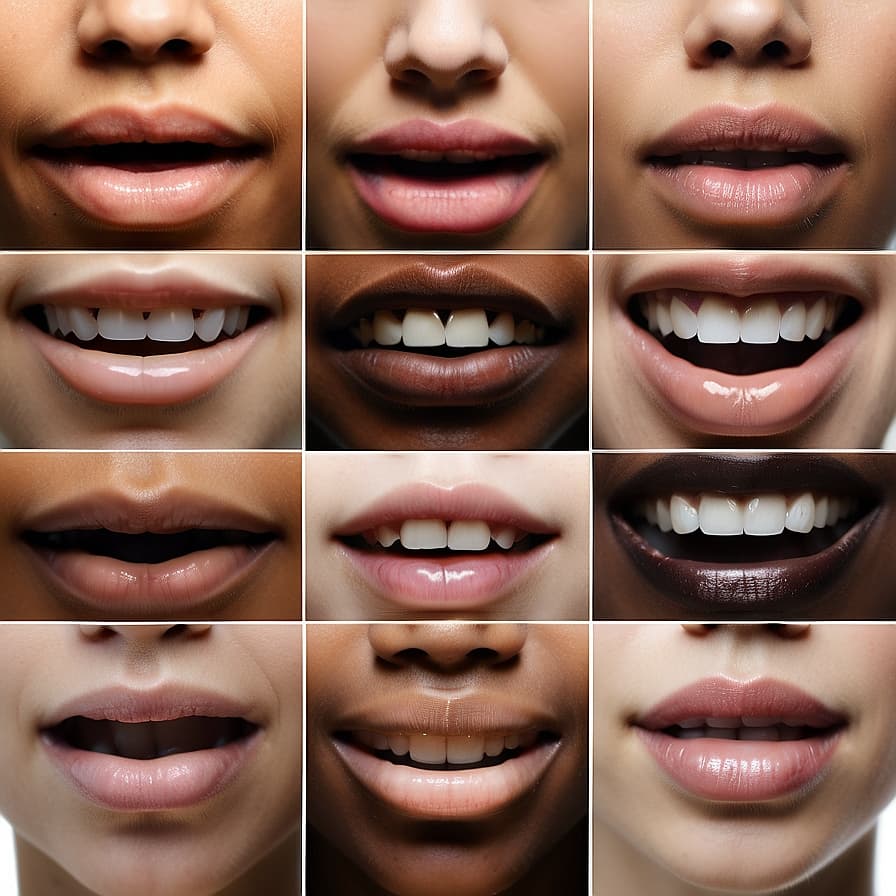
Skin tone clusters in the Fitzpatrick III–V range, most commonly a warm medium-brown with golden or olive undertones; coastal and outdoor labor pushes many toward a deeper bronze. Truly dark skin is rare. The facial structure is the giveaway — broad, rounded faces with wide cheekbones, a strong square jaw, a relatively short and wide nose with a low-to-medium bridge and full alar base, and notably full, well-defined lips on both sexes. Foreheads are often broad and slightly sloped.
Phenotype differences between Samoa and American Samoa are minimal at the population level; American Samoans show somewhat higher rates of European, African American, and other Pacific Islander admixture, which surfaces as lighter skin, looser curl patterns, or a narrower nasal bridge in a visible minority. The defining Samoan signature is mass plus softness — a heavily built frame carrying rounded, full features rather than angular ones.
Data depth
0/100Coverage of image-grounded phenotype observations · drives AI generation diversity
- Sample size
- 0/40· 0 images
- Image quality
- 0/30· 0% high
- Confidence
- 0/20
- Source diversity
- 0/10
- ·No image observations yet
Explore phenotype categories
Structured taxonomy with peer-reviewed scales · 22 anatomical categories


More from Polynesia
Generate Samoans AI Content
Use this ethnicity's phenotype data to create AI-generated content with accurate physical traits and cultural context.
Open Creator Studio