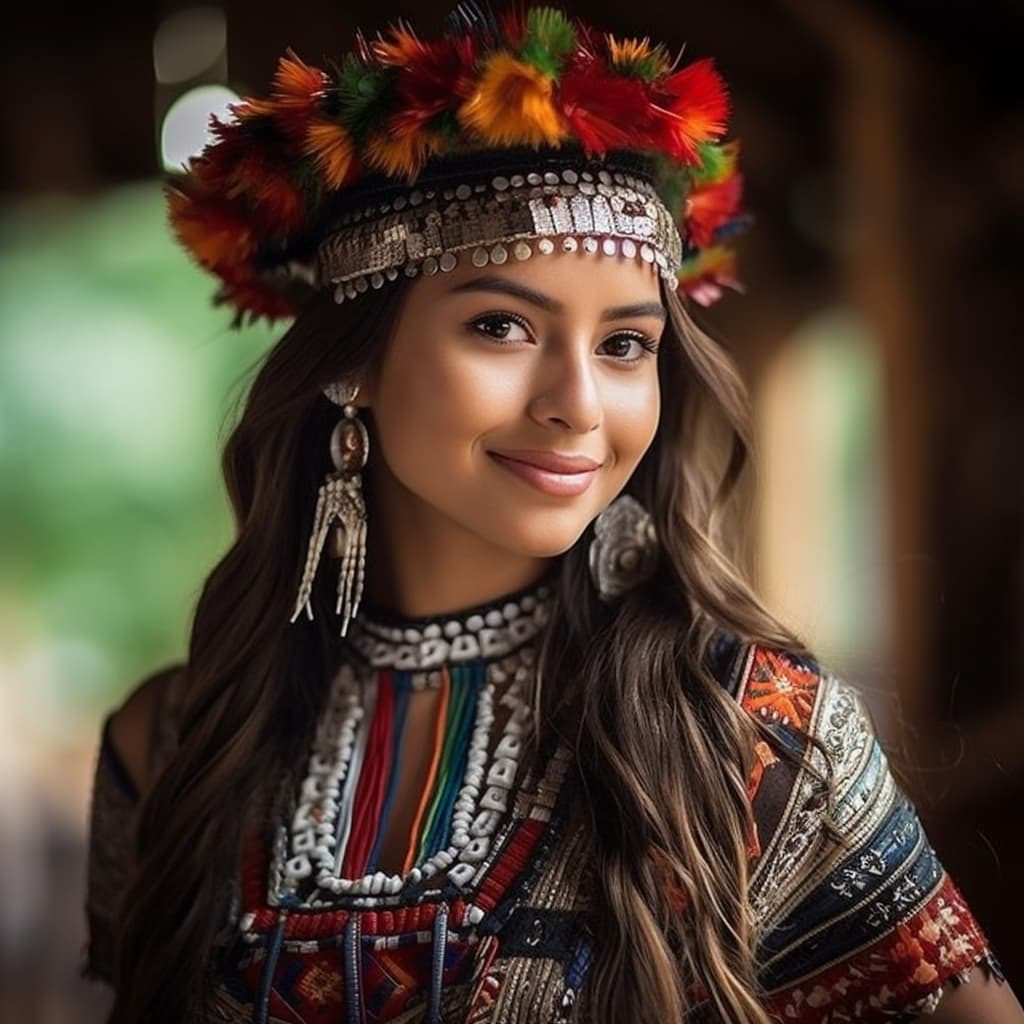
Purépecha Erotic
Michoacán (Mexico)
Purépecha
Christianity / Catholicism
Central America
About Purépecha People
The Purépecha are the people of the lake country of central Michoacán — Pátzcuaro, Zirahuén, Cuitzeo — and the volcanic highlands that ring them. They are one of the few Mesoamerican peoples the Aztecs never conquered. When Tenochtitlán's armies pushed west in the fifteenth century, the Purépecha state, ruled from Tzintzuntzan on the shore of Lake Pátzcuaro, beat them back and held a militarized frontier against the Triple Alliance until the Spanish arrived. That fact shapes how they remember themselves: not as a remnant absorbed by a larger pre-Hispanic order, but as a parallel one.
Their language reinforces the separateness. Purépecha — speakers call it P'urhépecha or Tarasco in older Spanish usage — is a language isolate. It has no demonstrated relatives anywhere in the Americas. Linguists have tried to link it to Quechua, to Zuni, to the Chibchan languages of Colombia, and none of the proposals has held up. It sits in the middle of Mexico surrounded by Uto-Aztecan and Otomanguean neighbors and answers to none of them. Roughly 150,000 people still speak it, concentrated in four sub-regions the Purépecha themselves distinguish: the Lake (Lacustre), the Sierra, the Cañada de los Once Pueblos, and the Ciénega de Zacapu.
Catholicism arrived early and arrived softly, by Mesoamerican standards. The bishop Vasco de Quiroga, in the 1530s and 40s, organized the surviving Purépecha communities around a model drawn partly from Thomas More's Utopia: each pueblo specialized in a single craft — copperwork in Santa Clara del Cobre, lacquer in Uruapan, guitars in Paracho, pottery in Tzintzuntzan and Capula, woven reed in the lake villages. That occupational geography is still the economic map of the region almost five centuries later. Quiroga is remembered locally as Tata Vasco, a kind of folk-saint, and the affection is genuine.
The most visible Purépecha custom outside the region is the Night of the Dead on Janitzio and the other lake islands — an all-night candle vigil in the cemeteries on the first of November, distinct in character from the broader Mexican Día de los Muertos and predating most of its tourist iconography. Inside the region, daily life still runs on the cargo system of rotating community offices, on extended godparent networks, and on a calendar that braids the Catholic feast days into older agricultural rhythms without much friction between the two.
Typical Purépecha Phenotypes
Reference for AI generation — hair, eyes, skin, facial structure, build
The Purépecha — sometimes called Tarascans — are a highland Mesoamerican population centered on the volcanic plateau and lake basin of Michoacán, and their phenotype reflects long isolation from the Nahua and Maya populations to the east and south. Hair is uniformly dark: jet black to very dark brown, thick, coarse, and almost always straight, with the heavy single-strand density typical of Indigenous Mexican populations. Gray comes late and tends to silver rather than yellow. Body and facial hair is sparse; men's beards grow in thinly along the jaw and chin rather than across the cheeks.
Eyes are dark brown to near-black, often appearing flat black under low light. The eyelid carries a mild internal epicanthic fold in a substantial minority — less pronounced than in East Asian populations but more visible than in mestizo Mexicans of heavier Spanish admixture. Eye shape is moderately almond, set slightly deep under a low-to-medium brow.
Skin tone runs Fitzpatrick III–IV, a warm coppery brown with red-bronze undertones rather than the olive cast common further north. Highland sun and elevation push exposed skin darker on the face, forearms, and hands while the torso stays noticeably lighter. Cheeks often carry a natural ruddy flush.
Facial structure is the group's most recognizable feature: broad, high cheekbones; a relatively flat midface; a short nose with a low-to-medium bridge and moderately wide alae; and full, evenly proportioned lips without the everted upper lip seen in some Maya groups. The jaw is square but not heavy, and the chin is short.
Build is short and compact. Adult men typically stand 5'2"–5'6" (158–168 cm) and women 4'9"–5'2" (145–158 cm), with broad shoulders relative to height, a short torso, and short, sturdy legs — an anthropometry shared with other highland Mesoamerican populations adapted to altitude. Body composition leans muscular and barrel-chested in men, with women carrying weight at the hips and lower abdomen. Sub-regional variation is modest: lake-basin communities (Pátzcuaro, Janitzio) trend slightly shorter and rounder-faced than the sierra communities to the west, who show somewhat longer faces and taller frames.
Data depth
0/100Coverage of image-grounded phenotype observations · drives AI generation diversity
- Sample size
- 0/40· 0 images
- Image quality
- 0/30· 0% high
- Confidence
- 0/20
- Source diversity
- 0/10
- ·No image observations yet
Explore phenotype categories
Structured taxonomy with peer-reviewed scales · 22 anatomical categories
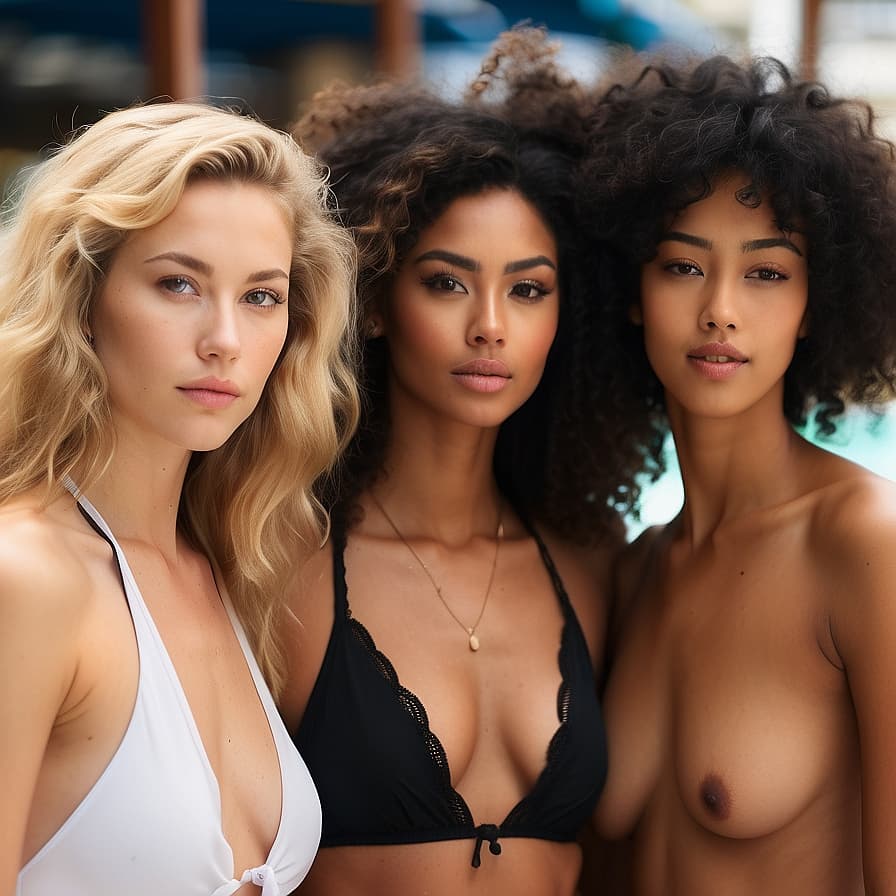



Generate Purépecha AI Content
Use this ethnicity's phenotype data to create AI-generated content with accurate physical traits and cultural context.
Open Creator Studio