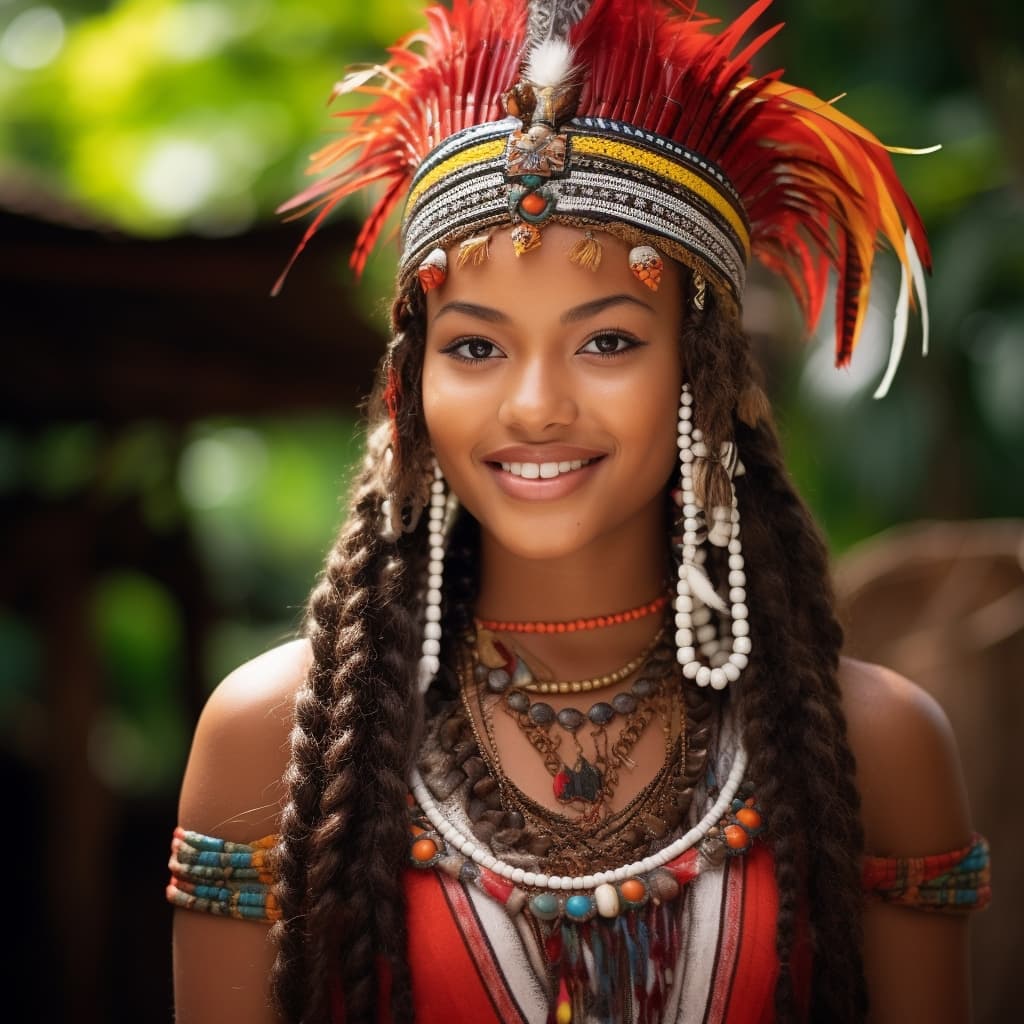
Kalinago Erotic
Lesser Antilles
Macro-Arawakan / Arawakan / Kalinago
Christianity / Catholicism
Garifuna
Central America
About Kalinago People
The Kalinago are the people Europeans called "Carib" — the namesake of the Caribbean itself, and for several centuries the most determined Indigenous resistance the Lesser Antilles ever produced. They occupied the arc of small volcanic islands stretching from the Virgin Islands down to Grenada, displacing or absorbing earlier Arawakan-speaking populations in the centuries before contact. Today the largest concentrated community lives in the Kalinago Territory on the windward coast of Dominica, roughly 3,700 acres set aside in 1903 — the only meaningful tract of land any Caribbean Indigenous group still holds collectively.
The language story is unusual and worth slowing down for. Their speech belonged to the Arawakan family, despite a long-standing tradition that men spoke a "Carib" tongue and women an Arawakan one — a split linguists now read as the residue of conquest, in which Kalinago men retained ritual and trade vocabulary from a Cariban substrate while everyday speech remained Arawakan. The original Kalinago language is effectively extinct in Dominica, though traces survive in place names, plant names, and the everyday Caribbean English of the territory. Its closest living descendant is Garifuna, spoken by tens of thousands along the coasts of Belize, Honduras, Guatemala, and Nicaragua — the language carried there by the Garifuna, descendants of Kalinago who intermarried with shipwrecked and escaped Africans on St. Vincent and were deported en masse by the British in 1797 after years of war.
Catholicism arrived through French missionaries in the seventeenth century and is now the dominant religion in the Dominica community, though it sits over older layers — beliefs about ancestral spirits, the significance of certain trees and stones, and a continuing respect for the boyé, traditional healers whose knowledge of bush medicine has outlasted most other pre-contact institutions. The Kalinago Chief is elected every five years and presides over a council that manages the territory's communal land; private title is not permitted, which has preserved the territory but complicated economic life within it.
Material culture is most visible in basketry — the tightly woven larouma reed baskets, often double-walled with a waterproof layer of heliconia leaves between, are distinctive enough that experienced eyes can identify a Kalinago piece across a room. Canoe-building from a single gommier trunk persisted into living memory and is still practiced ceremonially. The community numbers around 3,000 in Dominica, with smaller populations in St. Vincent, Trinidad, and the wider diaspora.
Typical Kalinago Phenotypes
Reference for AI generation — hair, eyes, skin, facial structure, build
The Kalinago phenotype reads as a clearly Indigenous Amerindian baseline with measurable post-contact admixture — predominantly West African through the Garifuna branch, and lesser European and other Caribbean inputs. The structurally distinctive feature is the combination of straight to gently wavy black hair with a moderately broad, low-bridged nose and broad malar (cheekbone) prominence, set against a warmer copper-brown skin tone than most mainland South American Indigenous groups. The Kalinago Territory population in Dominica preserves this baseline most consistently; the Garifuna branch in St. Vincent, Belize, Honduras and Guatemala carries visible African admixture and looks substantially different.
Hair is almost uniformly black or very dark brown, straight to slightly wavy, with low to moderate density and minimal facial or body hair on men. In Garifuna populations the texture shifts toward Type 3 and 4 coils with the same dark color range. Eyes are dark brown to near-black, typically almond-shaped with a soft, often partial epicanthic fold — less pronounced than East Asian groups but more present than in European or African populations. Eyebrows tend to be straight and moderately thick.
Skin tone in the Dominica Kalinago sits at Fitzpatrick IV–V, a warm copper to russet brown with yellow-red undertones; Garifuna skin runs deeper, Fitzpatrick V–VI with cooler neutral undertones. The face is typically wider than long, with high broad cheekbones, a relatively short and rounded jaw, and a nose that is medium-width with a low to medium bridge and moderately flared alae. Lips are medium-full and well-defined; the upper lip is often slightly thinner than the lower. Sylvanie Burton's public photographs show the typical Dominica-Kalinago facial geometry clearly.
Build runs short to medium-short — adult men commonly 5'4"–5'7", women 5'0"–5'3" — with a compact, broad-shouldered torso, shorter limbs relative to trunk, and a tendency toward solid mesomorphic body composition rather than slender or tall frames. Garifuna individuals are noticeably taller and longer-limbed than territory Kalinago, reflecting the African component of that branch.
Data depth
46/100Coverage of image-grounded phenotype observations · drives AI generation diversity
- Sample size
- 6/40· 2 images
- Image quality
- 25/30· 50% high
- Confidence
- 15/20· mean 0.83
- Source diversity
- 0/10· wikipedia
- ·No image observations yet
- ·Wikipedia-only source — not population-representative
Explore phenotype categories
Structured taxonomy with peer-reviewed scales · 22 anatomical categories
Notable Kalinago People
7 reference figures — sourced from Wikipedia
- Irvince Auguiste — Former Chief of the Kalinago Territory in Dominica, and founder of Touna Auté…
- Sylvanie Burton — The first woman and first Kalinago president of Dominica, inaugurated in 2023.
- Nona Aquan — Artist and Carib Queen of the Santa Rosa First Peoples Community in Arima, Tr…
- Anette Sanford — Dominican nurse, first female Kalinago Chief in Dominica in 400 years, and Se…
- Claudius Sanford — Former Dominican Senator, resident of the Carib Territory, and husband of the…
- Nasio Fontaine — Reggae artist from Dominica.
- Whitney Mélinard — Dominican activist and founder of the Kalinago Ripple Effect Initiative based…
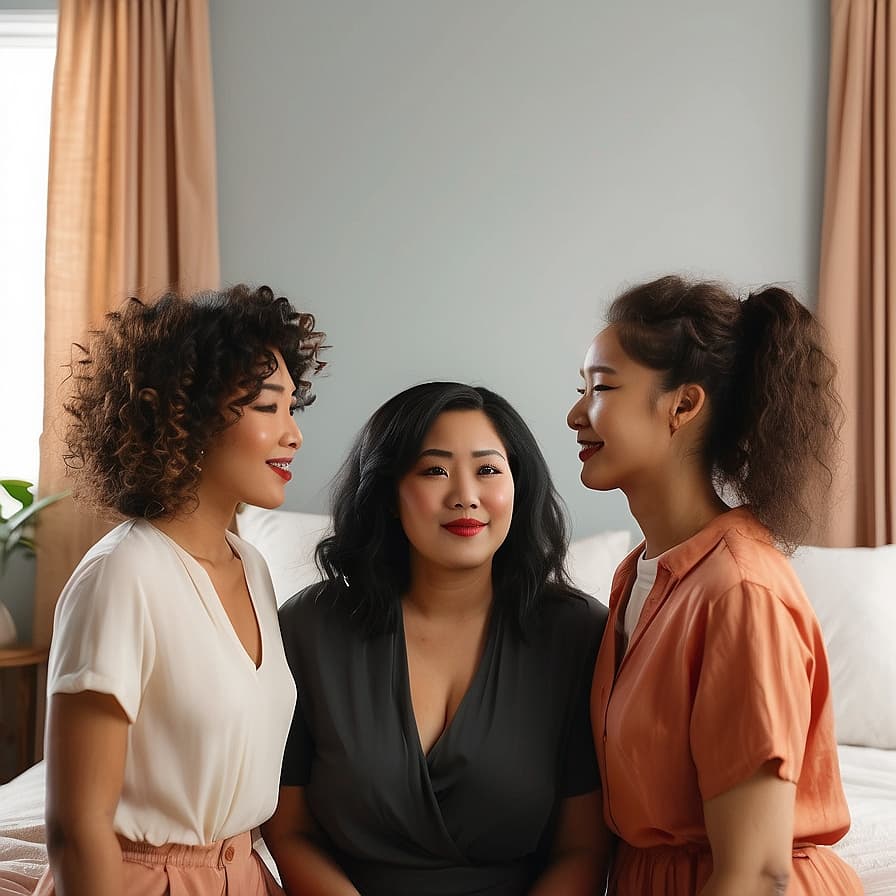
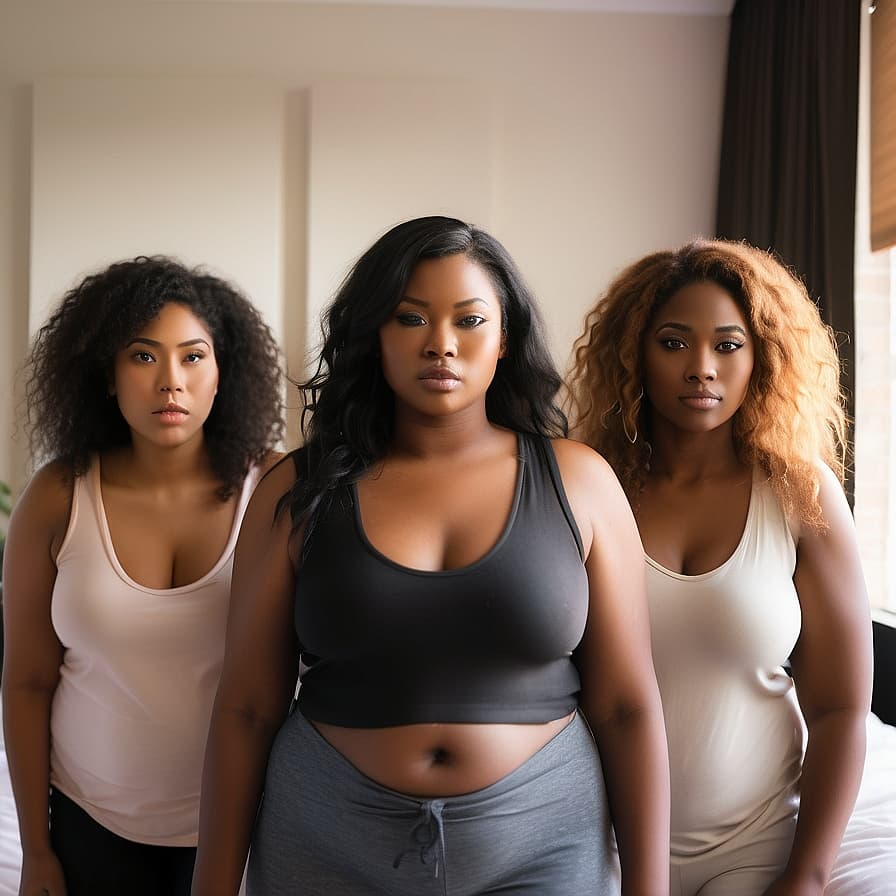
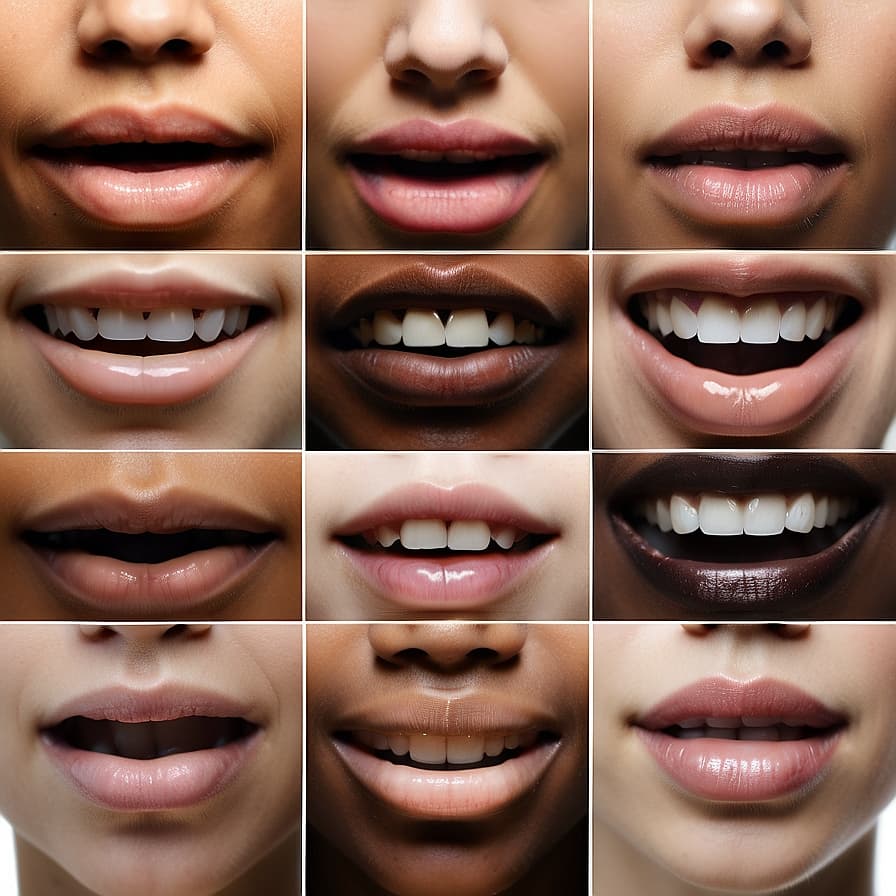
Generate Kalinago AI Content
Use this ethnicity's phenotype data to create AI-generated content with accurate physical traits and cultural context.
Open Creator Studio